On the streets of Hong Kong, the “Ze-Ze”s strive
Sundays are filled with fun and glamour in the world’s third-largest financial center and biggest free trading port. Yet walking on the streets of Central, the most prosperous and expensive section of Hong Kong, one would invariably notice the tents and cardboard “castles” on the sides of the overpasses.
“Ze Ze,” which means “sister” in Cantonese, is no strange word to the Hong Kong middle class. With just over 5,000 HKD, which is one-fourth of the average median income of the SAR’s residents, families can hire a Philippino/Indonesian housemaid who cooks, does chores, and teaches English to the children in the house six days a week, relieving some burden from the fast-pacing life at Hong Kong. To Hong Kongers, Hiring a “Ze Ze” represents a lifestyle, and more importantly, a symbol of status.
Due to the exceedingly high price of Hong Kong property, the Ze Zes often have to live in spaces as small as 3 square meters, or sometimes the storage rooms, balconies, and bathrooms. Companies even invented furniture called the “Phillipino room,” with an enclosed single bed that’s only 60 centimeters wide and limited storage space. Only on Sundays do they catch a breath, and hang out on the street. Prejudice and estrangement prevail throughout society.
Contrary to common misconception (even among Hong Kongers), the Ze Ze community are rather bittersweet, though exploited and discriminated against. Converted to Philippino Pesos or Indonesian Rupiah, The Ze Zes make above-average wages, which help their family of origin or support their pursuit of advanced education. [transition here] Surrounding their Phillipno/Indonesian heritage, the Ze Zes built up a tightly joined community and thrived, becoming unique and indispensable aspects of Hong Kong.

The picnics on the streets would indeed look dark, narrow, and rather unhygienic, but if you look closely, you see the joy on their faces. They would bring snacks, play card games, and share experiences. Their conversations are filled with vibrance and positivity. During these conversations, experiences are passed down, and nostalgia is consolated. Here, the Zezes are no longer strangers working on foreign land, but families who would support each other.

The Ze Zes strive to create better working conditions for themselves. They form unions and associations, pushing legislation for both benefits and supervision. Today, Hong Kong law requires free health care, an annual trip back to their home country, and duly paid wages. On top of the well-defined content of work and labor contracts, organizations issued guides dedicated to foreign household labor, helped to file lawsuits, and arbitrated disputes between Ze Zes.

Like chisel to a sculptor and brushes to a painter, these two-wheel carts are the tools of trade for the Ze Zes. On work days, they would carry groceries in these, take out the sorted trash bags (as Hong Kong government mandates), and suitcases for all their possessions when they are laid off from a household. On Sundays, they bring picnic mats, homemade food, karaoke machines, and everything else they need to places of gatherings on these carts.

Coming to Hong Kong means becoming a full-time housemaid, it means forsaking time, labor, and even autonomy. The Sundays gave them the last bits of freedom, so that they may preserve their last dignity. On weekdays, Janella (alias) would do her best with the three kids in the employer’s house, but on Sunday, would bring out her speaker and breakdance. Many Ze Zes dreamed of being doctors, teachers, and models, but when they saved enough money to pursue their dreams, they found their daughters to follow the same path.
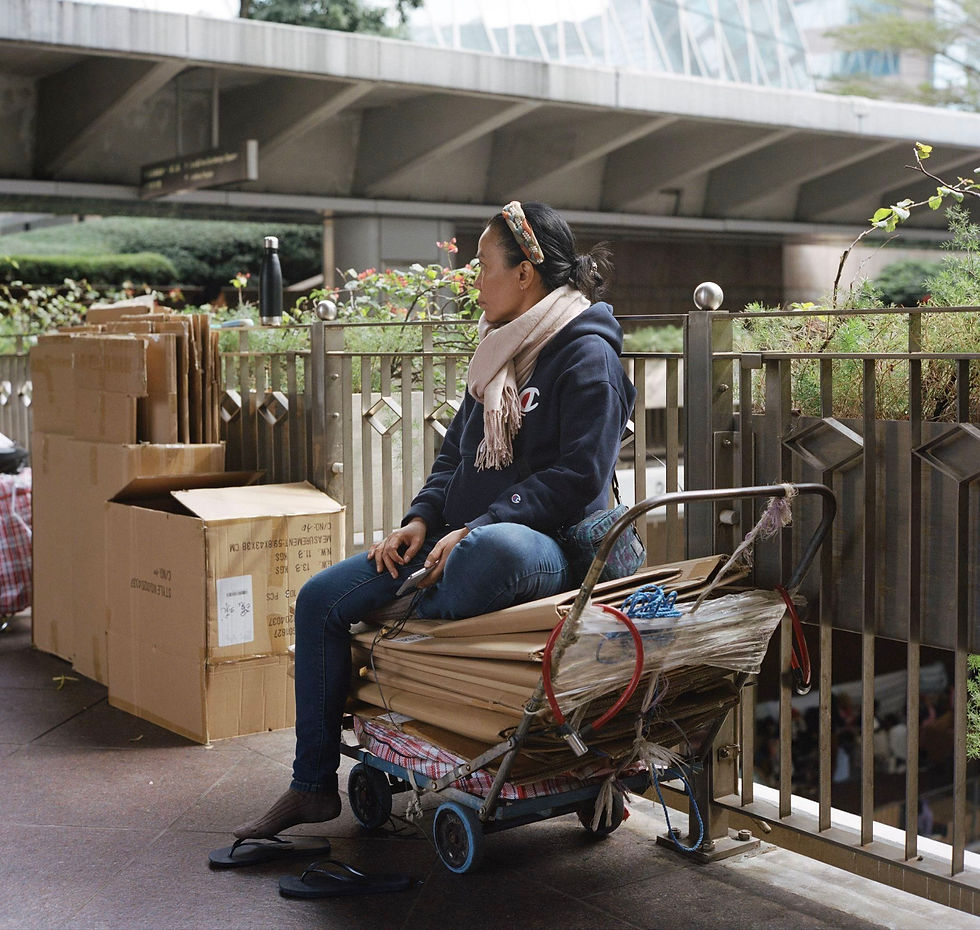
To prevent foreign labor from taking part-time jobs and competing with locals, A Ze Ze is required to live with her employer. Though discouraged by law, many walk on the grey ground. Maria (alias) collects cardboard and sells them to recycling centers in exchange of meager money. “What I earned today isn’t enough even enough for a meal at central,” she said, “but I need everything so that my daughter back in Manila could finish college.”

Though Hong Kongers largely believed in Buddhist-Taoist syncretism and Christianity, the Ze Zes retained their beliefs. Indonesian Ze Zes, largely Muslim, would gather at the Kowloon park after worshipping at the mosque nearby. The park manager, Chen, became friends with the Ze Zes, and would visit his acquaintances every Sunday. Zara (alias, not featured in this photo as requested) runs a Halal food station in front of the park, and knowing her difficulties, the Ze Zes would always get something from her.

The high living cost in Hong Kong burdens the Ze Zes, especially the ones who are trying to save for a goal. Although food is provided by the employer on workdays, clothing and other necessities in districts like Central are wildly unaffordable to them. The Ze Zes form marketplaces, where off-brand clothes and care products are a little cheaper, and prices are negotiable.

Every Sunday, the Philippino Ze Zes would flock to Jollibee’s to get a taste of home. Maria (aforementioned alias) said: “I try to come every month, it reminds me of how lucky I am. I only had my first proper Jollibee meal after coming [here], because all we had in Philippines was ‘pagpags’ from the leftover bins. In occasions like this, I hope my daughter is here, but I also don’t want her to repeat my path; She deserves something better.”
Comments